College of Engineering · Utica, NY
College of Engineering · Utica, NY
College of Engineering · Utica, NY
We design nano-antennas, implantable photonic chips, wireless power systems, and on-device AI, so that future medical devices can sense, report, and act from inside the body.
These problems are usually studied by separate research communities. Solving them together is what will make cell-sized implants practical.
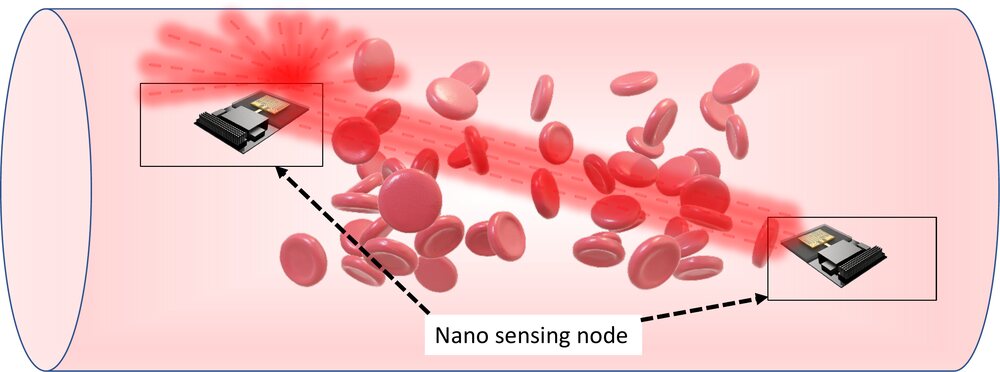
Antennas that use light instead of radio waves, small enough to work at the scale of a single cell. The same device detects disease markers and reports what it finds.
Read paper →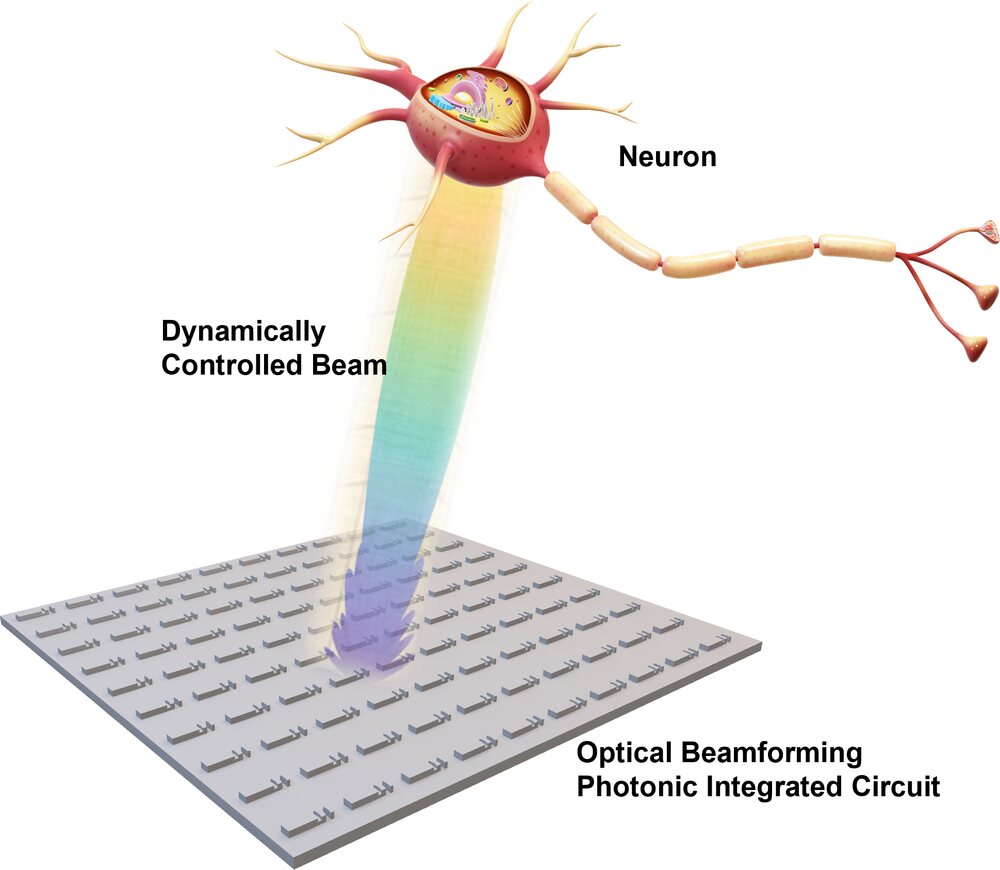
An implantable chip that steers a beam of light through tissue to reach individual neurons. We also presented this work at the Optica Biophotonics Congress 2026.
Read paper →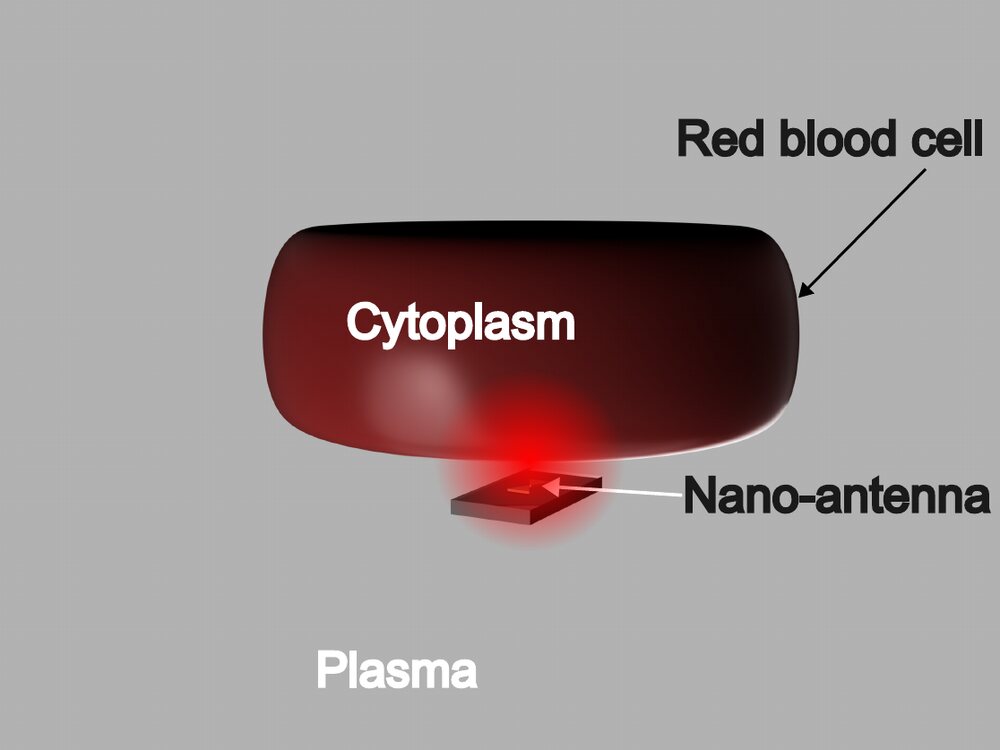
Nano-antennas that can sense and send data from one cell at a time. Undergraduate researchers Hunter Hanrahan and David Serino led the work.
Read paper →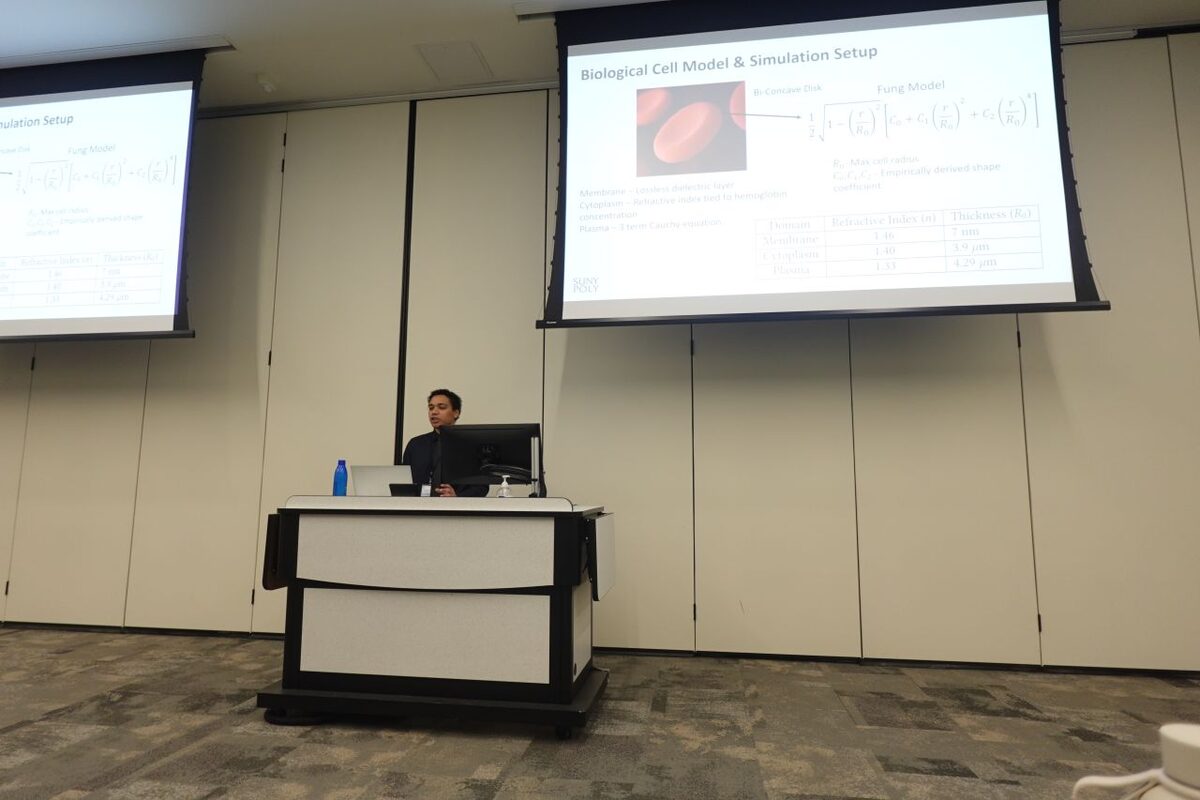
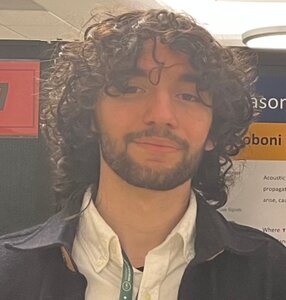
Our single-cell nano-optical antenna paper, presented in person.
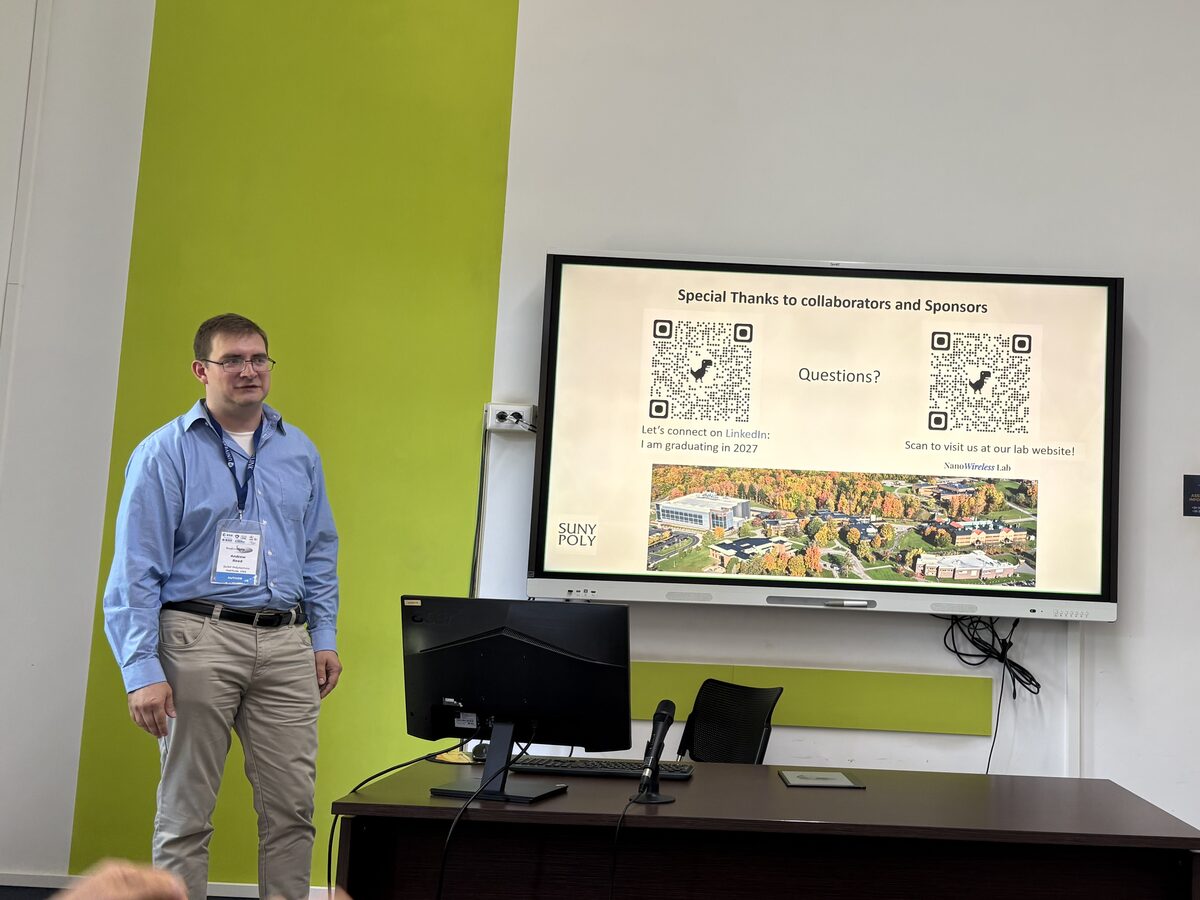
Edge intelligence with physics-based ML and LLM reasoning for spectrum sensing.
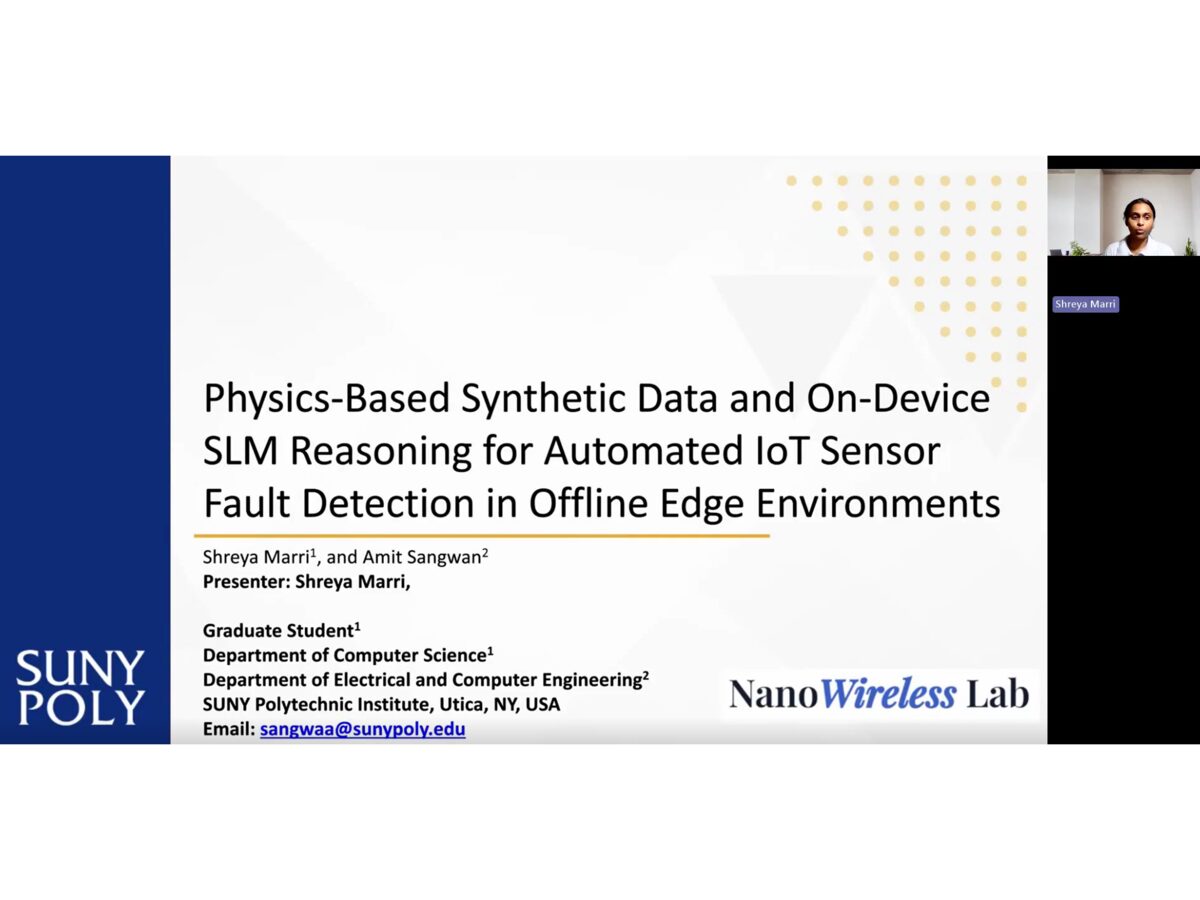
On-device language-model reasoning for IoT sensor fault detection.
Led by Dr. Amit Sangwan (PhD, Northeastern University), our postdoc, Master's, and undergraduate researchers lead their own projects and present them as co-authors at international conferences. We are recruiting motivated students and welcome academic, clinical, and industry collaborators.